

Marine Hull Insurance is a type of marine insurance that provides financial protection for the physical vessel against specified risks covered under the insurance policy.
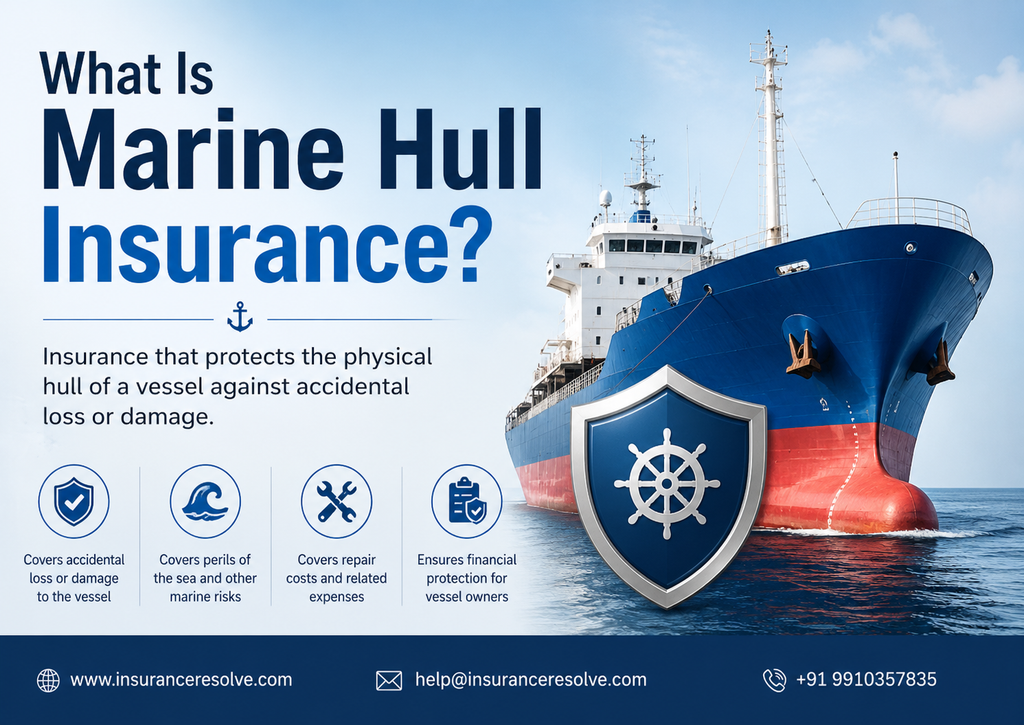
A vessel is a significant asset, and damage to its hull, machinery, equipment, or other insured components can result in substantial repair or replacement costs. Marine Hull Insurance is designed to protect the insured vessel against covered maritime risks, subject to the policy’s terms, conditions, exclusions, and limits.
What Does Marine Hull Insurance Cover?
The exact coverage depends on the specific policy. Generally, Marine Hull Insurance may provide protection against physical loss or damage to the insured vessel arising from covered events.
Depending on the policy, these may include:
- Collision with another vessel or object
- Fire and explosion
- Storms and other severe weather events
- Stranding or grounding
- Accidental damage
- Certain maritime perils
- Damage to insured machinery and equipment
The actual risks covered can vary depending on the type of vessel, policy wording, geographical limits, and selected coverage.
What Is Insured Under a Marine Hull Policy?
Marine Hull Insurance primarily relates to the physical vessel rather than the goods or cargo being transported.
Depending on the policy, the insured property may include:
- Ship or boat hull
- Machinery
- Navigation equipment
- Permanently installed equipment
- Other specified vessel components
The policy will normally define what is included within the insured vessel and the basis on which losses are valued.
Marine Hull Insurance vs Marine Cargo Insurance
Marine Hull Insurance and Marine Cargo Insurance protect different interests.
Marine Hull Insurance primarily protects the vessel itself against covered physical damage or loss.
Marine Cargo Insurance generally protects goods or cargo being transported against covered risks.
For example, if a cargo vessel suffers physical damage during a collision, the vessel may fall under Marine Hull Insurance, while damage to the goods being transported may be considered under Marine Cargo Insurance.
What Is Usually Not Covered?
Marine Hull Insurance policies contain exclusions that specify circumstances in which coverage may not apply.
Depending on the policy, exclusions can relate to:
- Normal wear and tear
- Mechanical deterioration
- Certain unapproved activities
- Intentional damage
- Uninsured risks
- Events outside the policy’s geographical or contractual limits
The exact exclusions depend on the wording of the policy.
Why Is Marine Hull Insurance Important?
Vessels can be exposed to numerous risks while operating at sea, in ports, or in other navigable waters.
Damage to a vessel can result in significant costs involving repairs, machinery, equipment, salvage, or other associated expenses. Marine Hull Insurance can help reduce the financial impact of covered losses.
For commercial vessel owners and operators, suitable hull coverage can therefore be an important part of managing the financial risks associated with maritime operations.
Marine Hull Insurance and Claims
When a covered incident occurs, the insurer generally assesses the circumstances and extent of the damage before determining the amount payable under the policy.
The final settlement may depend on factors such as:
- Nature and extent of damage
- Policy coverage
- Applicable deductible
- Repair or replacement costs
- Policy limits
- Valuation provisions
- Exclusions and conditions
As a result, the amount claimed by the vessel owner and the amount ultimately settled by the insurer may not always be identical.
Types of Vessels That May Be Insured
Marine Hull Insurance can apply to different types of vessels, depending on the insurer and policy.
These may include:
- Cargo ships
- Commercial vessels
- Fishing vessels
- Passenger vessels
- Tugs and barges
- Workboats
- Other specified marine vessels
The coverage requirements can differ considerably depending on the vessel’s purpose, size, operation, and area of navigation.
Understanding Marine Hull Insurance
Marine Hull Insurance is essentially protection for the physical vessel against specified marine risks.
It is important to understand that coverage is not unlimited. The policy determines which risks are insured, what property is covered, the applicable exclusions, deductibles, geographical limits, and the basis for calculating a claim settlement.
Conclusion
Marine Hull Insurance provides financial protection for a vessel against covered physical loss or damage. It may cover risks such as collision, fire, grounding, storms, and other specified maritime perils, depending on the policy.
Because marine insurance policies can contain detailed conditions and exclusions, understanding the policy wording is important for knowing the extent of protection available to the vessel owner or operator.

