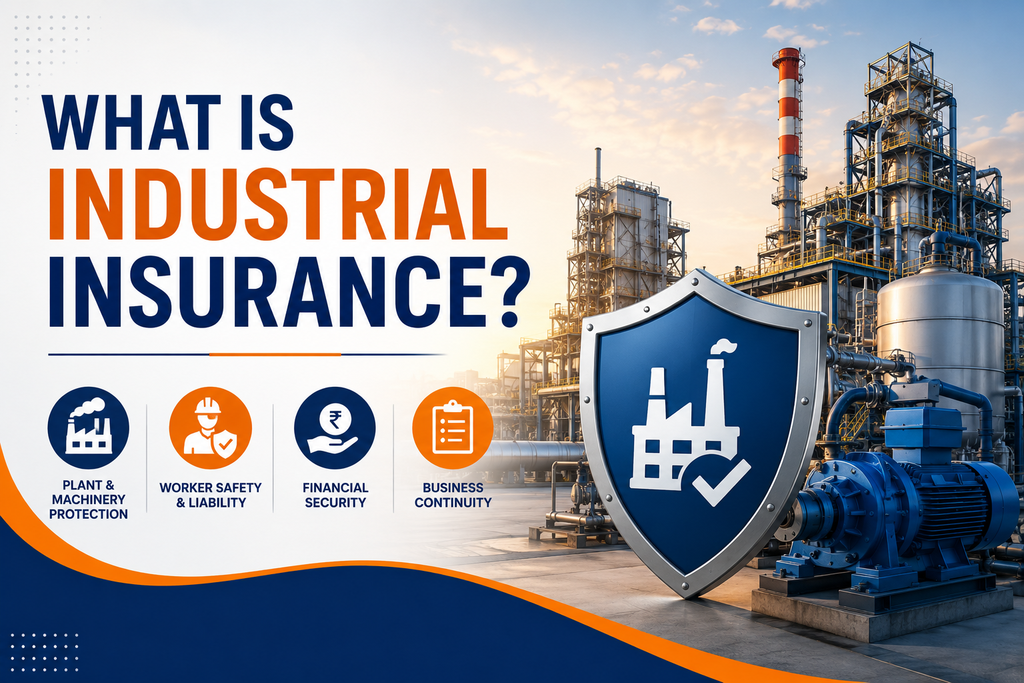

Industrial Insurance is a broad term used for insurance protection designed to address risks associated with industrial properties, factories, manufacturing units, machinery, equipment, stock, employees, and business operations.
Industrial businesses can face a wide range of risks, including fire, machinery breakdown, natural disasters, accidents, property damage, and interruptions to business activities. Industrial insurance helps provide financial protection against certain insured risks, depending on the policy.
What Does Industrial Insurance Mean?
Industrial Insurance refers to insurance arrangements designed for businesses operating in industrial and manufacturing environments.
Unlike insurance intended mainly for personal property, industrial insurance can involve large buildings, expensive machinery, raw materials, finished goods, warehouses, electrical installations, and other business assets.
The exact coverage depends on the nature of the industry and the insurance policy selected.
What Can Industrial Insurance Cover?
Depending on the policy, industrial insurance may provide protection for several types of business assets and risks.
These can include:
- Factory and industrial buildings
- Plant and machinery
- Manufacturing equipment
- Raw materials
- Finished goods
- Stock and inventory
- Electrical installations
- Furniture and fixtures
- Warehouses and storage facilities
- Certain business-related liabilities
- Losses arising from covered interruptions
Not every industrial insurance policy covers all these areas. Coverage depends on the policy terms.
Types of Risks Covered
Industrial businesses may face different risks depending on their activities and location.
Insurance protection may be available for risks such as fire, explosion, storms, floods, earthquakes, accidental damage, machinery breakdown, and other specified events.
Some risks may require separate insurance policies or additional extensions to obtain suitable protection.
Industrial Property Insurance
Industrial property insurance focuses mainly on physical assets such as factory buildings, warehouses, machinery, equipment, and stock.
If an insured event causes damage to covered property, the policy may provide compensation according to the applicable terms, limits, and conditions.
The value of the insured assets is an important consideration because industrial properties can contain high-value equipment and inventory.
Machinery Breakdown Insurance
Machinery is often one of the most important assets in an industrial business.
Machinery Breakdown Insurance can provide protection against certain sudden and unforeseen physical damage to insured machinery, subject to the policy terms.
This type of coverage is particularly relevant to industries where production depends heavily on mechanical and electrical equipment.
Business Interruption Protection
Damage to an industrial property can sometimes affect production and business operations.
Certain insurance policies may provide coverage for loss of profit or additional expenses resulting from an interruption caused by an insured event.
This type of protection is generally known as business interruption or consequential loss coverage, depending on the policy structure.
Liability Protection
Industrial businesses may also face liability risks involving employees, customers, contractors, visitors, products, or third parties.
Liability insurance can provide financial protection against certain legal liabilities, depending on the applicable policy.
The type of liability coverage required can vary according to the nature of the industrial operation.
Why Industrial Insurance Is Important
Industrial businesses often have significant investments in buildings, machinery, inventory, raw materials, and production systems.
Damage to any of these assets can create substantial financial consequences. Industrial insurance can help transfer certain financial risks to an insurer in exchange for the applicable premium.
However, insurance does not eliminate the risk itself. It provides financial protection only for losses that fall within the policy’s coverage.
Factors That Affect Industrial Insurance Coverage
Industrial insurance requirements can vary according to several factors, including:
- Type of industry
- Size and location of the facility
- Value of buildings and machinery
- Nature of manufacturing activities
- Type and quantity of stock
- Fire and safety arrangements
- Previous loss experience
- Policy limits and selected coverage
- Applicable exclusions and conditions
Because every industrial operation has different risks, insurance coverage is generally tailored to the business.
Industrial Insurance and Commercial Insurance
Industrial insurance can be considered a specialized area of commercial insurance.
Commercial insurance covers businesses in general, while industrial insurance is more closely associated with manufacturing plants, factories, industrial facilities, machinery, production processes, and related assets.
The distinction can vary depending on how insurers define their products.
Final Thoughts
Industrial Insurance provides financial protection against various risks faced by industrial and manufacturing businesses. It can involve coverage for buildings, machinery, stock, equipment, business interruptions, and certain liabilities.
The exact protection depends on the individual policy, including its insured risks, limits, exclusions, conditions, and extensions.
Understanding the nature of an industrial business and the risks associated with its operations is essential when evaluating the protection provided by industrial insurance.