

Insurance is an important financial product designed to provide protection against specific risks. However, a policy may become a concern when the product sold does not match the customer’s needs, the benefits are misrepresented, or important terms are not properly explained.
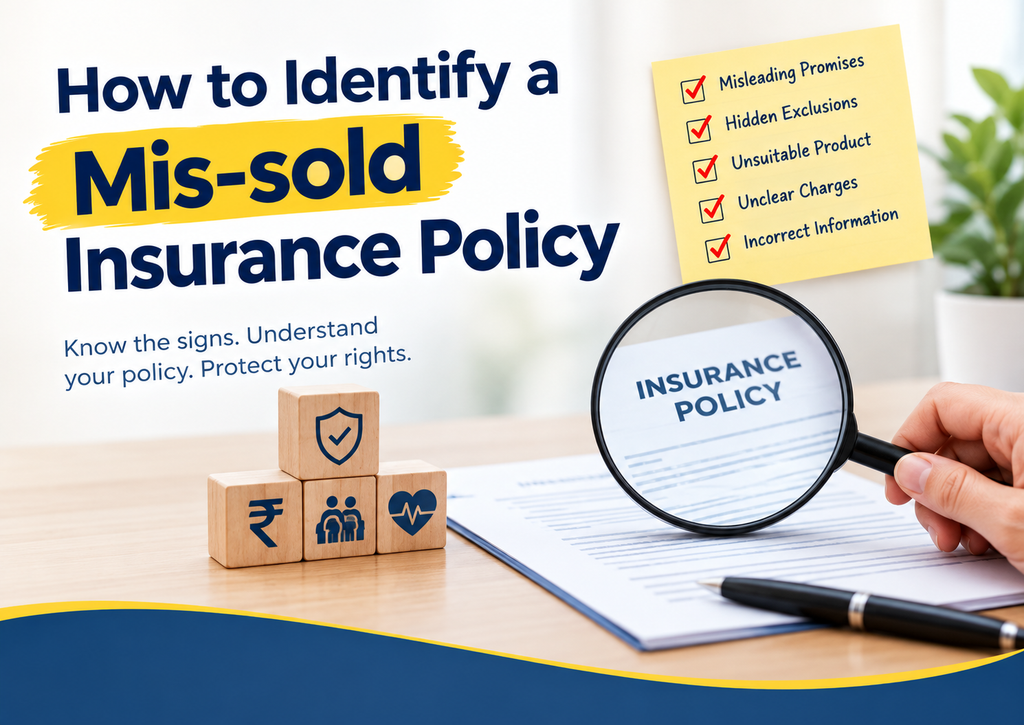
Insurance mis-selling refers to situations where an insurance product is sold through misleading information, incomplete disclosure, unsuitable recommendations, or other inappropriate sales practices. Understanding the common signs of mis-selling can help policyholders better evaluate their insurance policies.
What Is a Mis-sold Insurance Policy?
A mis-sold insurance policy is a policy that may have been purchased based on inaccurate, incomplete, misleading, or unsuitable information.
This can happen when a customer is not given a clear explanation of the policy’s features, exclusions, costs, risks, or limitations. Mis-selling concerns are assessed based on the actual circumstances, the policy documents, and the information provided during the sale.
Common Signs of a Mis-sold Insurance Policy
1. Promises That Do Not Match the Policy
One of the clearest warning signs is a difference between what was promised during the sale and what is written in the policy documents.
For example, a customer may have been told that a benefit, return, or coverage was guaranteed, while the policy contains conditions or limitations that were not explained.
2. Guaranteed Returns Were Promised Without Clear Explanation
Some insurance products include savings or investment-related features. Mis-selling concerns may arise when returns are presented as guaranteed without explaining the applicable conditions, maturity requirements, charges, or risks.
Customers should distinguish between guaranteed benefits specifically stated in the policy and estimated or projected returns.
3. Important Exclusions Were Not Explained
Insurance policies contain exclusions that limit the situations in which coverage is available.
If significant exclusions were not disclosed or were presented inaccurately, the customer may have developed an incorrect understanding of the policy’s protection.
4. The Policy Does Not Match the Customer’s Needs
A policy may be unsuitable when its features, costs, duration, or coverage do not reasonably match the customer’s stated requirements.
For example, a customer may have wanted pure protection but may have been sold a product with complex savings or investment-related features without an adequate explanation of its suitability.
5. The Product Was Presented as Something Else
Sometimes, a policy may be described as an investment, fixed deposit, savings plan, or guaranteed financial product rather than being clearly explained as insurance.
Presenting an insurance product in a misleading way can prevent a customer from understanding its actual nature and contractual terms.
6. Premiums or Charges Were Not Clearly Disclosed
A customer should have a clear understanding of the premium, payment frequency, policy charges, and other applicable costs.
Concerns may arise when the customer was not properly informed about recurring premiums, additional charges, penalties, or the financial consequences of discontinuing the policy.
7. Policy Terms Were Not Properly Explained
Important terms such as waiting periods, exclusions, deductibles, surrender values, lock-in conditions, renewal requirements, and policy limits may affect the value of insurance coverage.
If these terms were not adequately explained, the customer may have purchased the policy without a complete understanding of its implications.
8. Pressure to Purchase Immediately
High-pressure sales practices can sometimes prevent customers from properly reviewing a policy before making a decision.
Statements suggesting that a customer must purchase immediately, or that a benefit will disappear without a quick decision, may be concerning when they discourage informed consideration.
Pressure alone does not automatically prove mis-selling, but it can be relevant when considered alongside other facts.
9. Incorrect Information Was Recorded
A policy may contain incorrect information about the customer’s age, income, occupation, health details, financial objectives, or other relevant facts.
If information was entered inaccurately during the sales process or the customer was encouraged to accept incorrect details, it may create concerns about the suitability or validity of the policy.
10. The Customer Was Not Given Proper Policy Information
Customers should generally receive relevant policy information, including the policy document and applicable benefit details.
If a customer was not given sufficient information to understand the product, or was discouraged from reviewing the documents, this may be a sign that the sales process was not adequately transparent.
Comparing Sales Promises With Policy Documents
The policy document is an important reference for understanding the actual insurance contract. When evaluating a possible mis-selling concern, it can be useful to compare:
- Verbal promises made during the sale
- Advertisements or promotional material
- Benefit illustrations
- Emails, messages, or written communications
- Proposal forms
- Premium and charge details
- The final policy document
A difference between a sales representation and the written policy may require closer examination. However, not every misunderstanding automatically establishes that mis-selling occurred.
Insurance Mis-selling and Claim Rejection
Insurance mis-selling and claim rejection are separate issues, although they can sometimes be connected.
A claim rejection means that an insurer has determined that a claim is not payable under the applicable policy terms. Mis-selling concerns the manner in which the insurance product was represented or sold.
A rejected claim does not automatically prove that a policy was mis-sold. However, if the customer was given materially misleading information about coverage, the sales conduct may need to be examined separately.
How Mis-selling Can Affect Policyholders
A mis-sold policy can create several financial and practical consequences, including:
- Purchasing coverage that does not meet actual needs
- Paying for unsuitable or unnecessary benefits
- Unexpected premium obligations
- Confusion about policy returns or benefits
- Inadequate protection during a loss
- Disputes over claim settlement
- Financial loss from cancellation or surrender
- Difficulty understanding policy conditions
The impact depends on the type of policy and the circumstances of the sale.
Mis-selling in Different Types of Insurance
Life Insurance
Life insurance mis-selling may involve misleading claims about maturity benefits, returns, surrender value, premium obligations, or the level of life cover provided.
Health Insurance
Health insurance mis-selling may involve inadequate disclosure of exclusions, waiting periods, sub-limits, co-payments, room-rent restrictions, or pre-existing disease conditions.
Motor Insurance
Motor insurance concerns may relate to incorrect representations about coverage, add-ons, deductibles, exclusions, or the scope of protection.
Travel Insurance
Travel insurance may be mis-sold when coverage for medical expenses, cancellations, baggage, or other travel risks is represented inaccurately or without explaining important exclusions.
Property and Commercial Insurance
In property and business insurance, mis-selling concerns may involve incorrect information about insured values, business activities, exclusions, natural disaster coverage, or policy limits.
Why Policy Awareness Is Important
Insurance policies can be complex financial contracts. Understanding the difference between coverage, exclusions, benefits, charges, conditions, and limitations is important for making informed decisions.
Customers should consider the actual policy terms rather than relying only on verbal statements or promotional claims when evaluating the protection offered.
Conclusion
A mis-sold insurance policy may involve misleading promises, unsuitable recommendations, hidden exclusions, unclear costs, inaccurate information, or inadequate explanation of important policy terms.
Common signs include benefits that do not match sales promises, unexplained exclusions, unrealistic return claims, unsuitable products, and unclear premium obligations.
A concern about mis-selling should be evaluated using the policy documents, sales communications, representations made, and the circumstances surrounding the purchase.
Contact Insurance Resolve – How to Identify a Mis-sold Insurance Policy
For assistance with insurance mis-selling concerns, policy reviews, claim disputes, claim rejection, claim delays, and other insurance-related matters:
📞 Call: 99103-52249
📧 Email: help@insuranceresolve.com
🌐 Website: www.insuranceresolve.com

