
Insurance is an important financial protection tool, but the value of a policy depends on whether the product and coverage actually match the customer’s needs. Insurance mis-selling occurs when an insurance product is sold through misleading information, incomplete disclosure, unsuitable recommendations, or other practices that can cause a customer to make a decision without a proper understanding of the policy.
Mis-selling can affect different types of insurance, including life, health, motor, travel, property, and other insurance products. Understanding what insurance mis-selling means can help customers recognise situations where the policy they purchased may not match what was represented to them.
What Is Insurance Mis-selling?
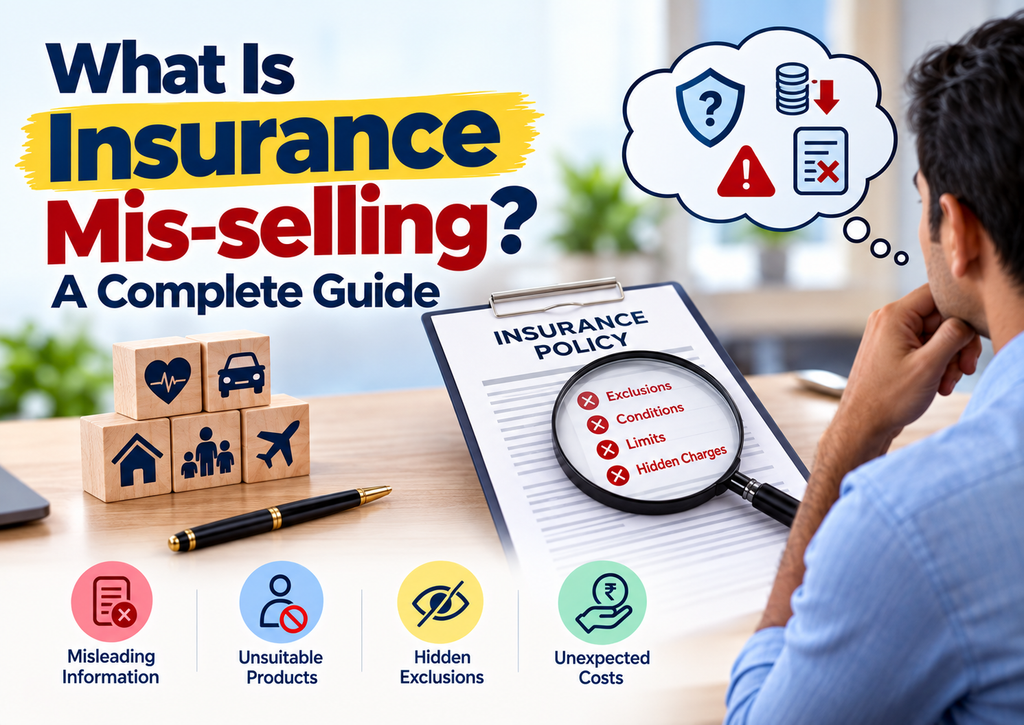
Insurance mis-selling refers to the inappropriate or misleading sale of an insurance product to a customer.
It may involve presenting incorrect information, hiding important policy conditions, making unrealistic promises, or recommending a product that does not reasonably match the customer’s requirements.
Mis-selling does not necessarily mean that an insurer or intermediary intentionally committed fraud. The circumstances need to be considered based on the information provided, policy documents, communications, and applicable rules.
Common Examples of Insurance Mis-selling
Insurance mis-selling can take different forms. Some common examples include:
1. Misrepresentation of Policy Benefits
A customer may be given an inaccurate impression about what a policy covers.
For example, a benefit may be presented as guaranteed or comprehensive when the actual policy contains conditions, exclusions, or limits.
2. Hiding Important Exclusions
Insurance policies commonly contain exclusions and limitations.
If significant exclusions are not properly explained and a customer is led to believe that a particular risk is covered, this may raise concerns about mis-selling.
3. False or Misleading Promises
Promises about returns, claim approval, coverage, or policy benefits that are inconsistent with the actual policy terms can create misleading expectations.
The written policy generally remains an important reference for understanding the contractual coverage.
4. Selling an Unsuitable Product
A policy may be unsuitable when it does not reasonably match the customer’s stated requirements, financial circumstances, or intended purpose.
For example, a customer may be encouraged to purchase a complex insurance product without adequately understanding its features or long-term financial implications.
5. Incorrect Information About Premiums
Customers should have a clear understanding of the premium and other applicable charges.
Misleading information about premium amounts, payment requirements, future premiums, or policy costs can potentially create financial difficulties.
6. Misleading Information About Returns
Some insurance products may include investment or savings-related features. Mis-selling concerns can arise when potential returns are presented in a way that creates unrealistic expectations or when important conditions are not adequately explained.
Insurance protection and investment-related features should not automatically be treated as the same thing.
7. Unnecessary Add-ons or Additional Coverage
Customers may sometimes be encouraged to purchase additional benefits or riders without a clear explanation of their purpose, cost, or relevance to their needs.
Whether such a recommendation amounts to mis-selling depends on the specific circumstances.
Insurance Mis-selling and Misrepresentation
Misrepresentation and mis-selling are related but not necessarily identical concepts.
Misrepresentation generally involves providing incorrect or misleading information about a policy, customer information, or other material facts.
Mis-selling is broader and can include unsuitable recommendations, misleading sales practices, inadequate explanation of important terms, or other conduct that results in a customer purchasing insurance without an appropriate understanding of the product.
Why Is Insurance Mis-selling a Serious Concern?
Insurance is often purchased for long-term financial protection. Customers may rely on their policies during situations involving illness, accidents, death, property damage, or other financial losses.
If the policy does not provide the protection the customer reasonably expected, the consequences can become significant.
Mis-selling can potentially result in:
- Unexpected financial losses
- Inadequate insurance protection
- Disputes over claim settlement
- Unwanted or unsuitable policies
- Higher-than-expected costs
- Difficulty understanding policy benefits
- Cancellation or surrender-related financial consequences
How Can Mis-selling Affect Insurance Claims?
Mis-selling and claim disputes can sometimes become connected.
For example, a customer may believe that a particular treatment, loss, or event is covered because of how the policy was explained during the sale. Later, the insurer may determine that the policy contains an exclusion or limitation that prevents the claim from being paid.
A claim disagreement alone does not automatically prove that mis-selling occurred. The circumstances surrounding the sale and the actual policy terms need to be considered.
Importance of Policy Documents
The policy document is an important source of information about an insurance contract.
It generally contains details regarding:
- Coverage
- Exclusions
- Policy limits
- Premiums
- Conditions
- Waiting periods
- Benefits
- Deductibles or co-payments where applicable
- Other applicable terms
Comparing the policy document with what was represented during the sales process can be important when evaluating a potential mis-selling concern.
Insurance Mis-selling in Different Types of Insurance
Life Insurance
Mis-selling concerns in life insurance may involve misleading information about policy benefits, premiums, returns, maturity benefits, surrender values, or the nature of the product.
Health Insurance
Health insurance mis-selling may involve inadequate explanation of exclusions, waiting periods, room-rent limits, co-payments, sub-limits, or other coverage conditions.
Motor Insurance
Motor insurance concerns may involve incorrect representations about coverage, add-ons, deductibles, or the extent of protection provided by a particular policy.
Travel Insurance
Travel insurance mis-selling may involve unclear or misleading representations about medical coverage, trip cancellation, baggage protection, exclusions, or destination-related conditions.
Property and Business Insurance
For property and commercial insurance, concerns may relate to coverage limits, exclusions, insured values, business activities, natural disaster coverage, or other policy conditions.
Insurance Mis-selling vs Insurance Claim Rejection
These are two different issues.
Insurance claim rejection means an insurer has determined that a claim is not payable under the applicable policy terms.
Insurance mis-selling concerns the way an insurance product was represented, recommended, or sold to the customer.
A rejected claim does not automatically mean the policy was mis-sold. However, if the customer was given materially misleading information during the sale, that may raise a separate concern that needs to be examined.
Why Documentation Matters in Mis-selling Concerns
Documents and communications can be useful in understanding what was actually represented to the customer.
Relevant information may include policy documents, proposal forms, illustrations, emails, messages, sales communications, premium information, and other records relating to the purchase.
The availability and relevance of such information depends on the circumstances of each case.
Consumer Awareness and Insurance Mis-selling
Customer awareness is an important part of reducing misunderstandings about insurance.
Understanding the difference between policy benefits, exclusions, conditions, limits, premiums, and additional features can help customers form realistic expectations about their insurance coverage.
Insurance should generally be evaluated based on the actual policy terms rather than only on verbal descriptions or promotional statements.
Conclusion
Insurance mis-selling occurs when an insurance product is sold through misleading, incomplete, unsuitable, or otherwise inappropriate sales practices. It can involve misrepresentation of benefits, inadequate disclosure of exclusions, unsuitable products, misleading return expectations, or unclear information about costs and coverage.
Understanding the actual policy terms and comparing them with the information provided during the sales process can help customers better identify potential concerns.
If a customer believes that an insurance policy was mis-sold, the circumstances should be examined carefully, including the policy documents, sales communications, representations made, and the actual coverage provided.
Contact Insurance Resolve – What Is Insurance Mis-selling?
For assistance with insurance mis-selling concerns, policy reviews, claim disputes, claim rejection, claim delays, and other insurance-related matters:
📞 Call: 99103-52249
📧 Email: help@insuranceresolve.com
🌐 Website: www.insuranceresolve.com

