

Insurance is meant to provide financial protection during difficult situations. However, fraudulent activities can target policyholders at different stages — from buying a policy to receiving a claim.
Insurance fraud may involve fake calls, misleading offers, forged documents, impersonation, unauthorized transactions, or false promises regarding policy benefits. Being aware of common warning signs can help policyholders protect their money and personal information.
What Is Insurance Fraud?
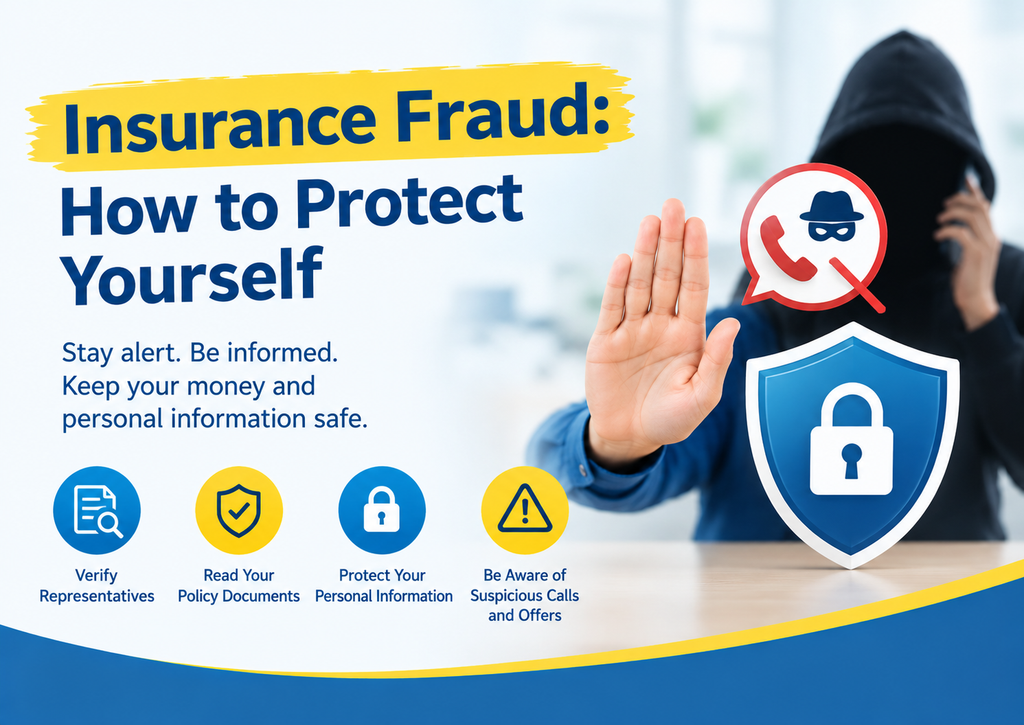
Insurance fraud refers to dishonest or deceptive activities connected with insurance transactions. It can be committed by individuals, intermediaries, policyholders, or other parties.
For a policyholder, fraud may occur when someone falsely claims to represent an insurance company or a regulator, asks for money to release a claim, promises unrealistic returns, or tries to obtain sensitive personal information.
IRDAI has specifically cautioned the public about spurious calls and fictitious or fraudulent offers, including people falsely presenting themselves as representatives of IRDAI or insurers.
Common Types of Insurance Fraud
Fake Insurance Calls
Fraudsters may call policyholders claiming that they are from an insurance company, IRDAI, a bank, or another authority. They may offer policy upgrades, refunds, bonuses, or claim-related assistance.
A caller creating urgency and demanding immediate payment should be treated with caution.
Fake Claim Settlement Offers
Some fraudsters may promise to release a pending insurance claim after payment of a processing fee, tax, verification charge, or other amount.
This type of fraud is particularly dangerous because the fraudster may already know some details about the policyholder or claim.
Fake IRDAI or Government Representatives
Fraudsters may use the names and logos of regulatory or government organisations to appear genuine.
IRDAI has warned that it does not sell insurance products or invest insurance premiums.
Misleading Insurance Sales
Fraud can also involve misleading representations about policy benefits, returns, coverage, or conditions.
For example, a person may be told that an insurance policy is a guaranteed investment or that certain benefits are included when they are not actually available under the policy terms.
Identity and Account Fraud
Insurance transactions involve personal information such as identity documents, contact details, bank information and KYC information.
Sharing sensitive information with an unverified person can expose a policyholder to financial and identity-related risks. IRDAI’s cyber-security guidance advises policyholders to provide personal information only when necessary and not to share passwords, PINs or OTPs without being certain about their use.
Warning Signs of Insurance Fraud
Certain situations should make a policyholder more cautious:
- A caller claims to be from IRDAI and asks for money.
- Someone promises unusually high or guaranteed returns.
- You are told that a claim will be paid only after making a payment.
- A person asks for your OTP, PIN or account password.
- You are pressured to make an immediate payment.
- An unknown person asks you to scan a QR code to receive an insurance payment.
- Someone asks you to transfer money to a personal bank account.
- An agent refuses to provide identification or licence details.
- You receive a suspicious link or email asking for sensitive information.
- Someone asks you to sign documents without allowing you to read them.
IRDAI’s current Bima Bharosa portal specifically warns complainants that it does not ask policyholders to make payments and advises them not to scan QR codes or use links claiming to provide a grievance-related disbursement.
How to Protect Yourself
Verify the Person Selling or Servicing the Policy
When purchasing insurance, verify the credentials of the agent or intermediary. IRDAI advises policyholders to ask an individual insurance agent for their licence and identity card.
Read the Policy Documents
Do not rely only on verbal explanations. Check the policy schedule, benefits, exclusions, conditions, premium, policy term and other important documents.
The written policy documents should be treated as an important reference when understanding your insurance coverage.
Be Careful With Personal Information
Do not casually share:
- OTPs
- PINs
- Passwords
- Banking credentials
- Card information
- Unnecessary KYC documents
IRDAI’s cyber-security guidance specifically warns policyholders against sharing passwords and OTPs and recommends using secure, genuine insurance websites.
Verify Payment Requests
Before making any insurance-related payment, independently verify the request through the insurer’s official communication channels.
A request for money to release a claim or resolve a complaint should receive particular scrutiny.
Keep Records
Keep copies of your policy documents, premium receipts, emails, claim communications, payment records and other important correspondence.
These records can be useful if a transaction or communication later becomes disputed.
What If You Suspect Insurance Fraud?
If you believe that you have been targeted by fraud, preserve the available evidence such as messages, emails, phone numbers, payment details, documents and screenshots.
For an insurance grievance, the first point of contact is generally the insurer’s grievance redressal mechanism. If the matter is not resolved satisfactorily, policyholders can use Bima Bharosa, IRDAI’s grievance-management platform. The current Bima Bharosa system provides complaint registration and tracking, and lists the toll-free numbers 155255 and 1800 4254 732.
Where criminal fraud or financial crime is suspected, the matter may also require reporting to the appropriate law-enforcement or cybercrime authorities.
Insurance Fraud and Mis-Selling Are Not Always the Same
Insurance fraud and mis-selling can overlap, but they are not identical.
Mis-selling generally involves misleading or inappropriate selling of an insurance product, such as providing an incorrect impression about its benefits or suitability.
Fraud involves deliberate deception or dishonest conduct intended to obtain an unlawful or improper benefit.
The facts and circumstances of each case matter, so a disputed insurance transaction should be assessed based on the available documents and communications.
Final Thoughts
Insurance fraud often succeeds because a fraudster creates urgency, trust or fear. Taking a few moments to verify information before sharing sensitive details or making payments can reduce the risk of becoming a victim.
Understanding your policy, verifying representatives, protecting personal information and keeping proper records are important parts of being a careful policyholder.
Insurance Resolve
Insurance Resolve helps policyholders understand and address insurance-related concerns, including:
- Insurance Mis-Selling
- Claim Rejection
- Claim Delay
- Claim Short Settlement
- Lapsed Policy Issues
- Insurance Service Issues
- Other Insurance-Related Problems
📞 +91 9910352249
📧 help@insuranceresolve.com
🌐 www.insuranceresolve.com
Insurance Resolve – We Resolve. You Relax.

