

When an insurance claim is submitted, the insurer generally reviews the claim against the policy terms, the circumstances of the loss and the information and documents available.
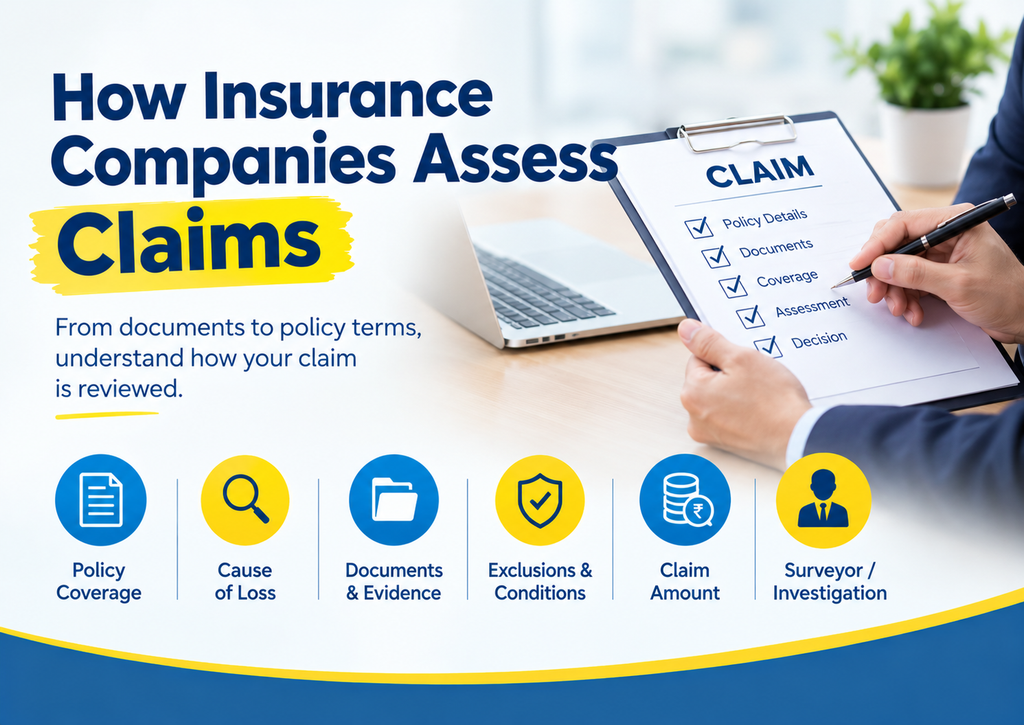
Claim assessment is not simply about checking whether a claim form has been submitted. The insurer may examine coverage, policy conditions, supporting documents, the cause of loss and the amount being claimed.
In India, IRDAI’s Protection of Policyholders’ Interests, Operations and Allied Matters of Insurers Regulations, 2024 and related master circulars provide the regulatory framework for policyholder protection and insurer operations.
What Is Claim Assessment?
Claim assessment is the process through which an insurer examines a reported loss or insured event to determine whether it falls within the policy coverage and, where applicable, what amount may be payable.
The exact assessment process varies according to the type of insurance.
A health insurance claim, motor claim, life insurance claim, property claim and marine insurance claim can involve very different documents and assessment requirements.
Checking Whether the Policy Was Active
One of the basic aspects of claim assessment is checking the policy details.
The insurer may examine:
- Policy number
- Policy period
- Type of coverage
- Premium status, where relevant
- Sum insured or policy limits
- Applicable endorsements
- Relevant policy conditions
A claim generally needs to relate to a risk covered during the applicable policy period.
Checking the Cause of the Loss
The insurer may examine what actually happened and whether the cause of the loss is covered by the policy.
For example, in a property claim, the circumstances surrounding damage to the property may be examined.
In a motor claim, the insurer may consider the circumstances of the accident and the nature of the damage.
In a health claim, medical records and treatment details may be relevant.
The purpose is to compare the actual circumstances with the coverage provided by the policy.
Reviewing Policy Coverage and Exclusions
The insurer assesses the claim according to the applicable policy terms.
This includes checking:
- Covered events
- Exclusions
- Conditions
- Waiting periods, where applicable
- Deductibles
- Sub-limits
- Specific exclusions or restrictions
- Other applicable limitations
A claim can therefore involve more than simply establishing that a loss occurred. The important question is also whether that particular loss is covered under the policy.
Checking the Documents
Documents can play an important role in claim assessment.
Depending on the type of claim, the insurer may require documents such as:
- Claim form
- Policy documents
- Bills and invoices
- Medical records
- Hospital documents
- Repair estimates
- Repair bills
- Police reports, where relevant
- Photographs
- Ownership documents
- Other supporting records
The documents required depend on the nature of the insurance and the circumstances of the claim.
Verifying the Information
An insurer may compare information provided in the claim with information available from other records.
For example, information in a claim form may be compared with policy records, bills, medical documents, repair records, photographs or other relevant evidence.
Where clarification is required, additional information may be requested.
Role of a Surveyor or Assessor
Certain general insurance claims may involve a surveyor or loss assessor.
Their role can include examining the loss, assessing damage, reviewing relevant evidence and preparing an assessment report.
The involvement of a surveyor does not mean that every claim will automatically be paid. The final claim decision remains subject to the applicable policy terms and the insurer’s claim process.
Assessing the Amount of Loss
Even when a loss is covered, the amount payable may not necessarily be the same as the amount claimed.
The insurer may consider:
- Actual extent of damage
- Repair or replacement costs
- Policy limits
- Deductibles
- Depreciation, where applicable
- Sub-limits
- Applicable terms and conditions
- Supporting bills and documents
This is one reason why the claimed amount and the finally assessed amount can sometimes be different.
Checking for Policy Conditions
Insurance policies contain conditions that can affect claims.
These may relate to matters such as notification, documentation, reasonable care, cooperation with the insurer and other requirements depending on the type of policy.
A claim assessment may therefore consider whether relevant policy conditions have been met.
Investigation in Certain Claims
Some claims may require additional investigation because of the circumstances involved.
For example, an insurer may need to verify the circumstances of an accident, the cause of damage, the authenticity of documents or other facts relevant to the claim.
The extent of investigation can vary significantly depending on the nature and complexity of the claim.
Claim Rejection and Short Settlement Are Different
A claim assessment can result in different outcomes.
Claim Rejection
A claim may be declined where, based on the applicable policy terms and facts, the insurer determines that the claim is not payable.
Short Settlement
A claim may also be assessed at an amount lower than the amount claimed.
This can happen where policy limits, deductibles, depreciation, sub-limits or other applicable terms affect the payable amount.
Claim Delay
A delayed claim is different from both rejection and short settlement. A claim may remain under assessment or require additional information before a decision is made.
These three situations should not automatically be treated as the same issue.
Why Understanding Claim Assessment Matters
Understanding how claims are assessed can help policyholders have clearer expectations about the process.
It can also help explain why insurers may ask for documents, clarification or additional information during claim processing.
At the same time, a policyholder can reasonably expect the claim to be considered according to the applicable policy terms and the relevant regulatory requirements.
What Policyholders Should Know
A claim decision depends on the specific policy and facts of the case.
Factors such as the type of insurance, policy wording, cause of loss, available evidence, exclusions, limits and supporting documents can all affect the outcome.
IRDAI’s policyholder-protection framework includes provisions relating to fair treatment and grievance redressal, while the 2024 Master Circular on Protection of Policyholders’ Interests provides detailed directions for insurers and policyholders.
Final Thoughts
Insurance claim assessment is a detailed process rather than a simple approval or rejection exercise.
The insurer may review policy coverage, the cause of loss, documents, evidence, exclusions, conditions and the amount of loss before reaching a decision.
For policyholders, understanding these factors can make insurance claims easier to understand and can help identify where a disagreement or concern may arise.
Insurance Resolve
Insurance Resolve helps policyholders understand and address insurance-related concerns, including:
- Insurance Mis-Selling
- Claim Rejection
- Claim Delay
- Claim Short Settlement
- Lapsed Policy Issues
- Insurance Service Issues
- Other Insurance-Related Problems
📞 +91 9910352249
📧 help@insuranceresolve.com
🌐 www.insuranceresolve.com
Insurance Resolve – We Resolve. You Relax.

