
When buying an insurance policy, the information provided by both the policyholder and the insurer plays an important role in understanding the contract.
Insurance is based on the information available when a policy is proposed and issued. Details about health, occupation, income, previous insurance, assets, risks and other relevant circumstances can affect how an insurer evaluates and provides coverage.
At the same time, insurers are expected to provide important policy features, terms and conditions in a clear manner so that customers can make informed decisions. IRDAI’s regulatory framework contains disclosure and information requirements intended to help policyholders understand insurance products.
What Is Policy Disclosure?
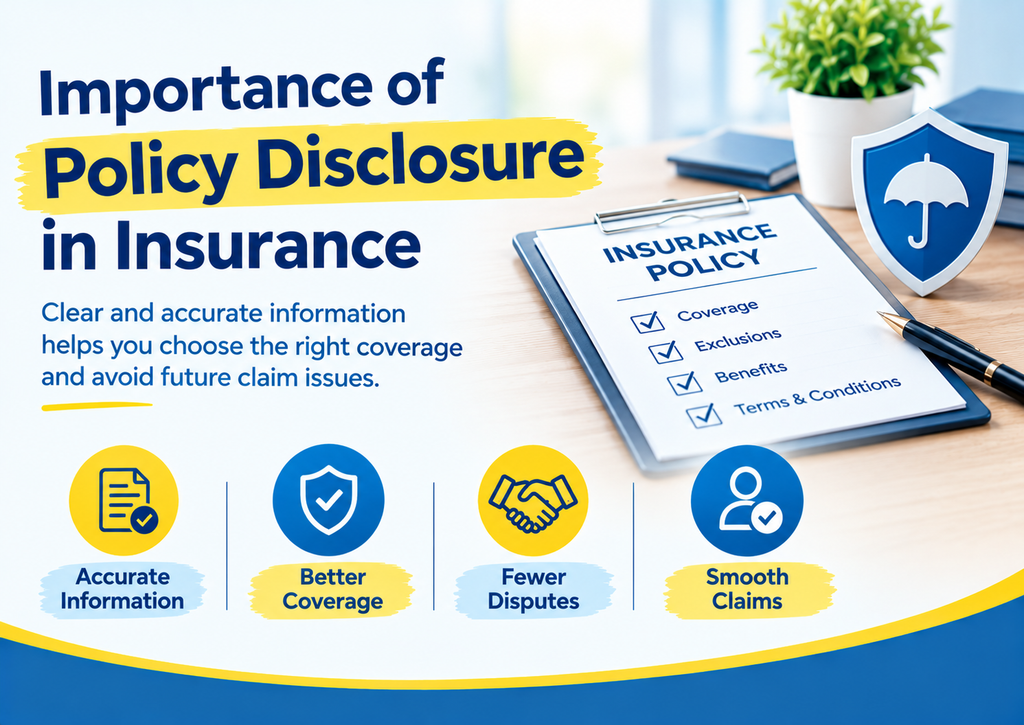
Policy disclosure refers to the relevant information provided during the insurance purchase and policy servicing process.
This can include information provided by the policyholder as well as information that the insurer is required to communicate about the product.
Examples may include:
- Personal and contact information
- Health and medical information, where relevant
- Previous insurance details
- Occupation and income information, where applicable
- Details of the insured property or vehicle
- Policy benefits
- Exclusions
- Premium
- Policy duration
- Waiting periods
- Deductibles and limits
- Applicable conditions
The exact information required depends on the type of insurance.
Why Accurate Disclosure Matters
Accurate information helps the insurer assess the risk associated with a policy.
For example, in health or life insurance, relevant medical information can affect underwriting. In motor or property insurance, information about the vehicle, property or insured risk may be important.
If relevant information is incomplete or incorrect, it can create questions later when the insurer reviews a claim.
What Happens When Information Is Not Disclosed?
The consequences depend on the nature of the information, the policy wording, applicable law and the circumstances of the case.
An incorrect or incomplete disclosure does not automatically mean that every future claim will be rejected. The relevance and materiality of the information and the applicable contractual and regulatory provisions need to be considered.
For this reason, policyholders should avoid assuming that a particular piece of information is “not important” without checking the proposal requirements or asking the insurer.
Material Information in Insurance
Some information can be particularly important because it may influence the insurer’s decision to accept a risk or determine the terms of coverage.
For example, depending on the type of policy, information about:
- Existing medical conditions
- Previous claims
- Previous policy cancellations
- Occupation
- Nature of business
- Property characteristics
- Previous losses
- Vehicle usage
may be relevant.
The meaning and treatment of material information can differ according to the insurance product and applicable legal framework.
Disclosure Is Also Important From the Insurer’s Side
Disclosure is not only about information supplied by the policyholder.
Policyholders also need clear information about the insurance product they are purchasing.
IRDAI’s 2024 Master Circular on Life Insurance Products requires key product features to be provided in simple terms, including benefits payable on survival, death and surrender, as well as applicable options and other important features.
For linked insurance products, the same circular also contains specific disclosure requirements covering investment risk, fund information, charges and other product characteristics.
Clear disclosure helps reduce the possibility of misunderstanding between what a customer expects and what the policy actually provides.
Policy Disclosure and Mis-Selling
Poor or incomplete disclosure can contribute to misunderstandings during insurance sales.
For example, a customer may believe that a policy provides a particular benefit because of the way it was explained, while the actual policy document contains limitations, exclusions or conditions.
This is why policyholders should compare sales explanations with the written policy documents.
Important features should not be understood only through advertisements, verbal promises or short product summaries.
Policy Documents Are Important
After purchasing insurance, the policyholder should carefully review the policy documents and related information.
Depending on the product, these may contain details about:
- Coverage
- Benefits
- Exclusions
- Conditions
- Premium
- Policy term
- Waiting periods
- Deductibles
- Limits
- Nomination
- Claim-related provisions
IRDAI’s life-insurance framework also requires key product features to be presented in simple terms, including the applicable free-look facility.
Disclosure and Insurance Claims
Disclosure can become particularly important when a claim is assessed.
An insurer may compare information provided at the time of purchase with information available when the claim is submitted.
If there is a difference, the insurer may seek clarification or supporting documents.
Whether that difference affects a claim depends on the nature of the information, the policy terms and applicable regulations.
Therefore, policyholders should not assume that every discrepancy automatically results in claim rejection.
Common Disclosure Errors
Some common problems include:
Incomplete Medical Information
A person may fail to mention a previous diagnosis, treatment or medical history because they believe it is insignificant.
Incorrect Occupation Details
Occupation can be relevant to certain insurance products, particularly where the nature of work affects risk.
Incorrect Usage Information
For motor or commercial insurance, the actual use of the insured vehicle or property may be relevant to coverage.
Not Mentioning Previous Claims
Previous claims or losses may be relevant to underwriting for certain types of insurance.
Signing Without Checking
Sometimes policyholders sign proposal forms or declarations without carefully checking the information recorded in them.
This can create problems if the submitted information is different from the policyholder’s actual circumstances.
Verbal Disclosure vs Written Disclosure
A conversation with an agent or intermediary can be useful for understanding a policy, but important information should also be reflected in the relevant documents.
If a customer is told that a particular benefit is available, it is sensible to verify that benefit in the policy wording or other official documentation.
Similarly, information provided by the policyholder should be checked carefully before submitting the proposal.
Disclosure Can Help Reduce Insurance Disputes
Clear and accurate disclosure can reduce misunderstandings between policyholders and insurers.
When both sides have a clear record of the relevant information and policy terms, it becomes easier to understand:
- What coverage was purchased
- What information was provided
- What exclusions apply
- What conditions apply
- What benefits are available
- Why a particular claim decision was made
This does not eliminate the possibility of disputes, but clear documentation can make the underlying facts easier to examine.
What Policyholders Should Remember
When buying or renewing insurance, policyholders should pay attention to both sides of disclosure:
Provide accurate information about the risk and personal circumstances requested by the insurer.
Understand the information provided by the insurer about coverage, exclusions, conditions, limits and benefits.
Keeping copies of the proposal form, policy documents and important communications can also help maintain a clear record of the insurance contract.
Final Thoughts
Policy disclosure is an important part of a transparent insurance relationship.
Accurate information from the policyholder helps the insurer assess the risk, while clear information from the insurer helps the policyholder understand what is actually being purchased.
Insurance should therefore be understood through the proposal information, policy wording, applicable terms and official documents, rather than through verbal assurances alone.
Where there is a disagreement about disclosure, mis-selling or a claim decision, the specific facts and policy documents should be examined carefully.
Insurance Resolve
Insurance Resolve helps policyholders understand and address insurance-related concerns, including:
- Insurance Mis-Selling
- Claim Rejection
- Claim Delay
- Claim Short Settlement
- Lapsed Policy Issues
- Insurance Service Issues
- Other Insurance-Related Problems
📞 +91 9910352249
📧 help@insuranceresolve.com
🌐 www.insuranceresolve.com
Insurance Resolve – We Resolve. You Relax.

