

Introduction
Insurance plays an important role in protecting individuals and families against unexpected financial difficulties. However, many people confuse life insurance with health insurance because both provide financial protection in different situations.
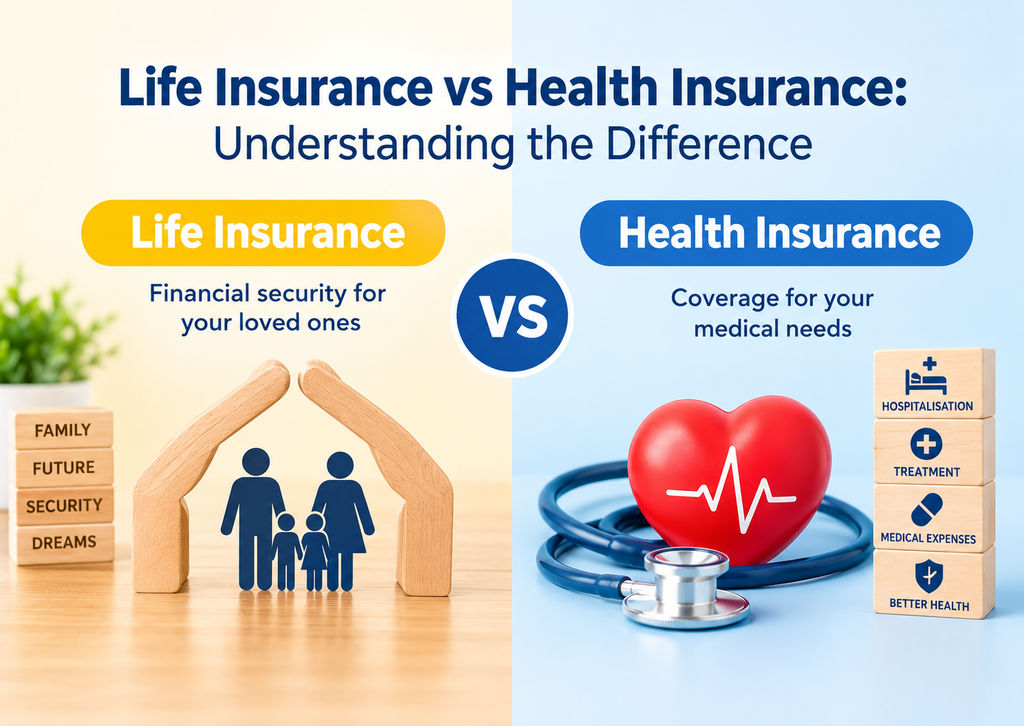
Although these policies share the common goal of reducing financial uncertainty, they serve different purposes. Life insurance primarily supports the financial needs of dependants after the insured person’s death, while health insurance helps cover eligible medical expenses arising from illness, injury, or hospitalisation.
Understanding the difference between life insurance and health insurance can help policyholders identify their coverage needs and avoid misunderstandings about insurance benefits.
What Is Life Insurance?
Life insurance is an agreement between a policyholder and an insurance company under which the insurer provides specified benefits according to the policy terms. Depending on the type of policy, a benefit may be payable to the nominee or beneficiary if the insured person dies during the covered period. Certain policies may also provide maturity or other benefits.
Life insurance is particularly important for people whose family members depend on their income. The financial benefit can help the family manage household expenses, outstanding loans, children’s education, and other financial responsibilities.
Different types of life insurance policies offer different benefits. A term insurance policy primarily provides life cover, while some other life insurance plans combine protection with savings or investment-related features.
What Is Health Insurance?
Health insurance is designed to provide financial protection against eligible medical expenses. Depending on the policy, it may cover hospitalisation, certain treatments, surgeries, and other specified healthcare expenses.
Some health insurance policies provide cashless treatment at eligible network hospitals, while others may reimburse covered expenses according to the policy conditions. Benefit-based health insurance policies may pay a fixed amount when a specified medical event occurs.
Health insurance can help individuals and families manage unexpected medical bills without relying entirely on their savings. However, coverage depends on the policy’s sum insured, exclusions, waiting periods, limits, and other applicable conditions.
Key Differences Between Life Insurance and Health Insurance
The main difference lies in the type of financial risk each policy is intended to address.
Purpose: Life insurance primarily provides financial support to beneficiaries following the insured person’s death, or other benefits where specified by the policy. Health insurance primarily covers eligible medical expenses or pays specified benefits for covered medical events.
Claim Benefits: Life insurance may pay a death benefit or maturity benefit, depending on the policy. Health insurance may reimburse eligible treatment costs, pay hospitals directly under cashless arrangements, or provide a fixed benefit for a specified event.
Beneficiary: Life insurance benefits are generally payable to the nominee or beneficiary as specified under the policy and applicable law. Health insurance benefits are generally used to meet covered medical expenses or paid to the insured person under the applicable benefit terms.
Coverage Period: Life insurance may provide protection over a long period, depending on the policy. Health insurance commonly operates for a defined policy period and requires renewal to maintain continuous coverage.
Financial Need: Life insurance addresses the financial impact of death on dependants. Health insurance addresses the financial burden of eligible healthcare costs.
Policy Conditions: Both types of insurance have specific terms, exclusions, and claim requirements. The exact benefits cannot be determined from the policy name alone.
Why Is Life Insurance Important?
The loss of an earning family member can create serious financial difficulties for dependants. Regular household expenses, loan repayments, education costs, and other obligations may continue even when the family’s primary source of income is no longer available.
Life insurance can help reduce this financial burden by providing benefits according to the policy terms. The appropriate amount of cover depends on factors such as family responsibilities, income, outstanding liabilities, and long-term financial commitments.
Policyholders should also understand the difference between pure protection plans and policies that include savings or investment-related benefits. This distinction can help prevent unrealistic expectations about returns or payouts.
Why Is Health Insurance Important?
Medical emergencies can result in substantial expenses, including hospital bills, diagnostic tests, surgery, medicines, and other treatment costs. Without adequate health coverage, these expenses may put pressure on household savings.
Health insurance can help manage eligible medical expenses, subject to the policy’s terms and limits. It is important to understand waiting periods, pre-existing disease provisions, exclusions, room-rent limits, co-payments, deductibles, and the scope of covered treatments.
Having health insurance does not necessarily mean every medical expense will be paid by the insurer. The actual payable amount depends on the coverage available and the terms applicable to the claim.
Can You Have Both Life Insurance and Health Insurance?
Yes. Life insurance and health insurance serve different purposes, so having both may provide more comprehensive financial protection.
Life insurance can help protect dependants against the financial consequences of the insured person’s death, while health insurance can help manage eligible medical expenses during the insured person’s lifetime.
For example, a family may face two separate financial risks: the loss of an earning member and the cost of a major medical emergency. These risks require different forms of protection, and one policy should not automatically be assumed to replace the other.
Common Misunderstandings About Life and Health Insurance
One common misunderstanding is that life insurance automatically covers hospital bills. Standard life insurance does not generally function as medical expense insurance, although specific riders or separate benefits may provide additional coverage.
Another misconception is that health insurance provides a death benefit in the same way as a life insurance policy. Ordinary health insurance is primarily intended to cover medical expenses or specified health-related benefits. Any accident or death benefit depends on the particular policy provisions.
Some policyholders also assume that purchasing insurance guarantees payment of every claim. In reality, claims are assessed according to the policy wording, coverage status, disclosed information, exclusions, and applicable requirements.
Misunderstanding these differences can lead to disappointment, disputes, and unexpected financial exposure.
What If Your Insurance Claim Is Rejected or Partially Settled?
A claim dispute may arise under either life insurance or health insurance. The insurer may raise concerns about policy conditions, documents, disclosures, exclusions, or other aspects of the claim.
If a claim is rejected, delayed, or settled for less than expected, it is important to understand the reasons communicated by the insurer and compare them with the relevant policy terms and supporting documents.
A clear explanation of the insurer’s decision can help the policyholder understand the dispute and consider the appropriate grievance redressal options.
Conclusion
Life insurance and health insurance are both important forms of financial protection, but they address different needs. Life insurance primarily protects the financial interests of dependants, while health insurance helps manage eligible medical expenses and specified health-related risks.
Understanding their differences, coverage conditions, and limitations can help policyholders make informed decisions and avoid confusion when a claim arises.
If you are facing an insurance-related problem involving claim rejection, claim delays, short settlement, policy mis-selling, or other insurance service issues, Insurance Resolve can help you understand your concern and explore appropriate resolution options.
Insurance Resolve – We Resolve. You Relax.
Contact Insurance Resolve
- Website: https://insuranceresolve.com/
- Email: help@insuranceresolve.com
- WhatsApp / Contact No.: +91 9910352249

