

Introduction
Insurance records play an important role in managing policies, understanding coverage, and resolving insurance-related issues. Whether a person has life insurance, health insurance, motor insurance, home insurance, or commercial insurance, maintaining accurate records can help prevent confusion and make it easier to handle claims when the need arises.
Many policyholders focus on purchasing insurance but overlook the importance of keeping policy documents, premium receipts, claim correspondence, and other related records safely. When an unexpected event occurs, missing documents or incomplete information can create unnecessary difficulties.
Maintaining proper insurance records helps policyholders stay informed about their coverage and protect their interests.
What Are Insurance Records?
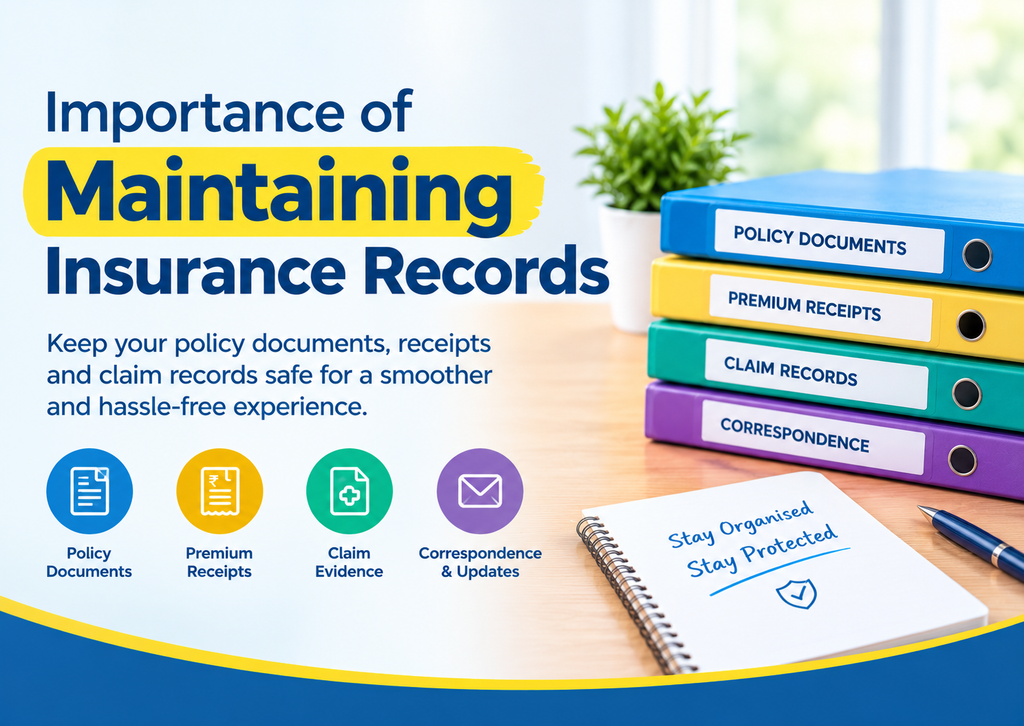
Insurance records include documents and information related to an insurance policy, its premiums, coverage, claims, and communications with the insurance company.
These records may include:
- Insurance policy documents and policy schedules
- Premium payment receipts and renewal confirmations
- Proposal forms and declarations submitted at the time of purchase
- Claim forms and supporting documents
- Medical reports, repair estimates, bills, and other claim-related evidence
- Emails, letters, and messages exchanged with the insurer
- Claim settlement letters, rejection letters, and grievance reference numbers
- Endorsements and documents showing changes to policy details
The records required may differ depending on the type of insurance and the nature of the claim.
Why Is Maintaining Insurance Records Important?
Easy Access to Policy Information
Insurance documents contain important details such as the policy number, coverage amount, policy period, insured persons, premium details, exclusions, and applicable conditions.
Keeping these documents organised makes it easier to check coverage when needed. It can also help policyholders identify whether a policy is active, due for renewal, or requires attention.
Smoother Insurance Claim Processing
When an insured event occurs, the insurer may require specific documents to assess the claim. Having relevant records readily available can help policyholders submit the necessary information and respond to requests more efficiently.
For example, a motor insurance claim may require photographs, a repair estimate, vehicle documents, and claim-related correspondence. A health insurance claim may involve medical reports, hospital bills, prescriptions, and discharge summaries.
The documents required depend on the policy and the circumstances of the claim.
Proof of Premium Payments
Premium receipts and payment confirmations provide evidence that a payment was made. These records can be useful if there is a disagreement about premium payment, policy renewal, or the status of coverage.
If a policyholder believes that a premium has been paid but the insurer’s records show otherwise, payment evidence may help clarify the matter.
Protection Against Misunderstandings
Insurance disputes sometimes arise because policyholders and insurers have different understandings of the coverage, declarations, exclusions, or benefits.
Keeping a copy of the policy wording, proposal form, benefit illustration, and communications received during the purchase process can help establish what information was provided and what terms were documented.
These records may be particularly useful when a policyholder believes that the policy sold differs from what was explained or promised.
Better Handling of Claim Rejection or Short Settlement
If an insurance claim is rejected or settled for less than expected, the policyholder may need to review the insurer’s explanation alongside the policy terms and supporting evidence.
Relevant records may include the rejection letter, claim assessment report, bills, estimates, medical records, photographs, and previous communications with the insurer.
Maintaining these documents can help the policyholder understand the reasons given for the decision and determine whether further clarification or a grievance may be appropriate.
Easier Policy Renewal and Updates
Insurance records help policyholders monitor renewal dates, premium amounts, changes in coverage, and updates to personal or insured property details.
Keeping updated documents can reduce the risk of overlooking important policy information. It is also useful to retain endorsements or written confirmations whenever changes are made to a policy.
Support for Family Members
In some situations, family members may need to locate insurance documents when the policyholder is unable to manage the matter personally or has passed away.
Keeping essential policy information organised and ensuring that trusted family members know where relevant documents can be found may help them understand the available coverage and contact the insurer when necessary.
Sensitive personal and financial information should always be shared securely and only with appropriate individuals.
What Insurance Records Should You Keep?
The records you maintain should reflect the insurance policies you hold.
Life Insurance: Policy documents, premium receipts, nominee details, benefit illustrations, and relevant claim correspondence.
Health Insurance: Policy schedules, coverage details, renewal receipts, medical records, hospital bills, and claim documents.
Motor Insurance: Policy documents, vehicle details, premium receipts, accident photographs, repair estimates, and claim settlement correspondence.
Home and Property Insurance: Policy schedules, property valuation documents, purchase records where relevant, photographs, repair estimates, and evidence of damage.
Commercial Insurance: Policy documents, asset registers, invoices, risk-related records, claim evidence, and relevant business correspondence.
Not every document will be required for every policy or claim. Policyholders should retain records according to the nature of their coverage and any applicable requirements.
Digital Storage of Insurance Records
Digital storage can make insurance records easier to access and organise. Policyholders may keep scanned copies of important documents in a secure digital folder, provided the information remains readable and accessible.
Using clear file names, arranging documents by policy type, and keeping copies of important emails can help prevent confusion.
It is also sensible to maintain a secure backup. Password protection, two-factor authentication, and restricted access can help protect sensitive information. Original documents should be retained when required, even if digital copies are available.
Common Problems Caused by Missing Insurance Records
Missing or incomplete insurance records can make it difficult to establish policy details, verify payments, respond to an insurer’s queries, or understand a claim decision.
For instance, a policyholder who cannot locate a rejection letter may struggle to identify the exact reasons for the decision. Similarly, missing repair bills or medical records may complicate the process of providing supporting evidence.
Missing documents do not automatically mean that a claim will be rejected. The effect depends on the policy terms, the documents required, the available alternative evidence, and the circumstances of the case.
Conclusion
Maintaining insurance records is an important part of responsible policy management. Accurate and organised documents can help policyholders understand their coverage, verify premium payments, manage renewals, support claims, and address disputes more effectively.
Keeping policy documents, receipts, claim evidence, and insurer correspondence safely can make a significant difference when insurance protection is needed most.
If you are facing insurance-related problems such as claim rejection, delayed claims, short settlement, policy mis-selling, lapsed policies, or other insurance service issues, Insurance Resolve can help you understand your concern and explore appropriate resolution options.
Insurance Resolve – We Resolve. You Relax.
Contact Insurance Resolve
- Website: https://insuranceresolve.com/
- Email: help@insuranceresolve.com
- WhatsApp / Contact No.: +91 9910352249

