

Introduction
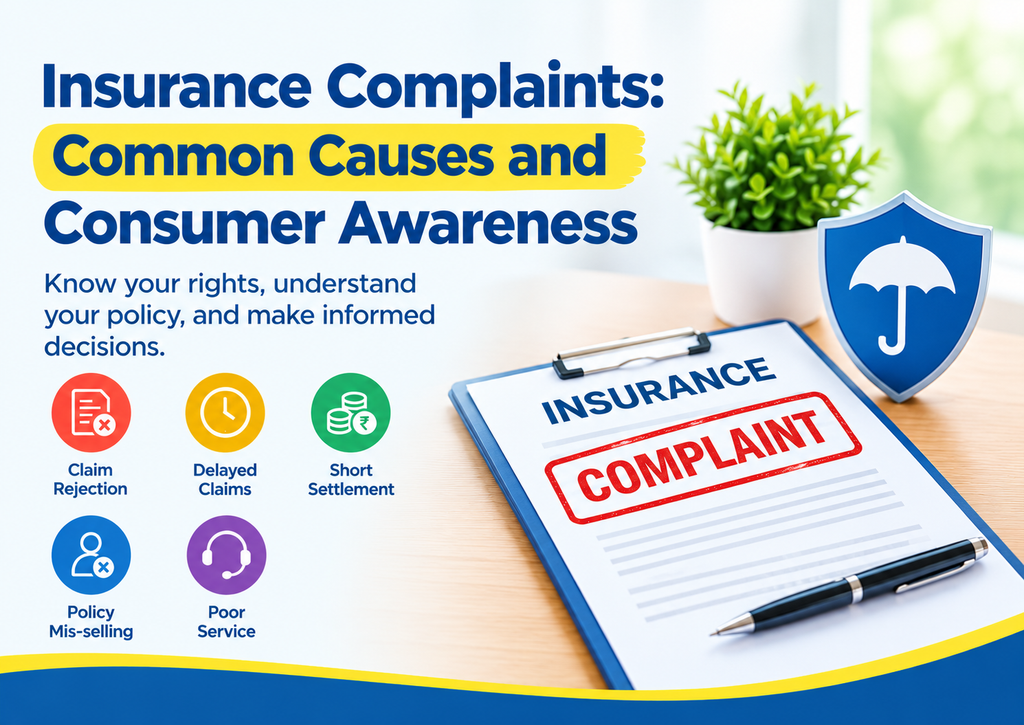
Insurance provides financial protection against unexpected events, but problems can arise when policyholders do not receive the service, coverage, or claim settlement they expect. Delayed claims, claim rejection, policy mis-selling, incorrect premium information, and poor customer service are some of the common concerns faced by insurance consumers.
Understanding why insurance complaints occur is important for both policyholders and insurance companies. Consumer awareness can help people make informed decisions, understand their policy rights, maintain proper records, and identify appropriate ways to raise concerns.
What Are Insurance Complaints?
An insurance complaint is an expression of dissatisfaction regarding an insurance policy, claim, service, or the conduct of an insurer or intermediary.
Complaints may relate to the sale of a policy, premium payments, policy documentation, claim processing, settlement decisions, or the handling of customer requests.
Some problems arise from misunderstandings about policy terms, while others may involve administrative errors, communication gaps, or disputes over coverage. Understanding the specific cause is an important part of finding an appropriate resolution.
Common Causes of Insurance Complaints
Claim Rejection
Claim rejection is one of the most stressful experiences for a policyholder, particularly when they believe their loss should be covered.
An insurer may reject a claim because of exclusions, eligibility conditions, incomplete documentation, questions about information disclosed when the policy was purchased, or other reasons stated in the policy and rejection letter.
However, a rejection should not be assumed to be correct or incorrect without examining the facts. Policyholders should understand the reasons given by the insurer and compare them with the policy wording and supporting evidence.
Delay in Claim Settlement
Insurance claims may take longer than expected because of document requirements, investigations, assessment procedures, verification issues, or communication gaps.
Delays can create financial pressure, especially when a policyholder needs money for medical treatment, vehicle repairs, property restoration, or other urgent expenses.
Consumers should retain claim reference numbers, submission confirmations, and correspondence with the insurer. These records can help clarify the status of a claim and support a complaint if the delay appears unreasonable.
Claim Short Settlement
A claim short settlement occurs when the insurer approves an amount lower than the amount claimed or expected by the policyholder.
The difference may arise from deductibles, depreciation, policy limits, co-payments, exclusions, valuation differences, or the insurer’s assessment of the covered loss.
If the settlement amount appears inconsistent with the policy terms or supporting documents, the policyholder can request a clear explanation of the calculation and review the relevant assessment or settlement letter.
Insurance Policy Mis-Selling
Policy mis-selling may occur when a policy is sold through misleading statements, incomplete explanations, or representations that do not match the actual policy benefits.
For example, a consumer may believe that a product guarantees a particular return or provides specific insurance coverage when the policy documents do not support that understanding.
Consumers should carefully review the policy benefits, exclusions, premium commitments, and other conditions before purchasing insurance. Important promises should be checked against official documents rather than relying exclusively on verbal assurances.
Policy Cancellation and Lapsed Policies
Disputes can arise when a policy is cancelled, becomes inactive, or lapses following missed premium payments or other circumstances.
Policyholders may misunderstand renewal requirements, grace periods, cancellation conditions, or the consequences of discontinuing a policy.
The exact rules vary by policy type. Consumers should review notices from the insurer and understand the implications before cancelling, replacing, or attempting to revive an existing policy.
Poor Customer Service and Communication
Unanswered emails, repeated requests for the same documents, unclear explanations, and difficulty obtaining updates can create frustration for policyholders.
Good communication is important throughout the insurance process, from purchasing a policy to making a claim. Consumers should keep written records of important conversations and request clarification when an insurer’s response is incomplete or difficult to understand.
Why Is Consumer Awareness Important?
Consumer awareness helps policyholders understand what they are purchasing and what they can reasonably expect from their insurance coverage.
An informed consumer is more likely to recognise the difference between a policy’s advertised features and its actual contractual benefits. Awareness also helps people identify exclusions, understand premium obligations, and avoid making decisions based on unrealistic promises.
Knowing how to access complaint channels is equally important. If an insurance-related problem remains unresolved, consumers may be able to pursue the insurer’s internal grievance process and, where appropriate, escalate the matter through an authorised external forum.
Understanding Your Rights as an Insurance Consumer
Insurance consumers in India have protections under applicable laws and regulatory requirements. The precise rights and procedures depend on the type of insurance, the issue involved, and the circumstances of the case.
Policyholders should receive relevant policy information and can seek clarification about coverage, exclusions, premiums, and claim decisions. They can also raise grievances regarding the handling of their policies or claims.
The Insurance Regulatory and Development Authority of India (IRDAI) oversees the insurance sector and provides grievance-related mechanisms. Depending on the circumstances, other appropriate forums may also be available.
Consumers should check the current official procedures, eligibility requirements, and time limits before escalating a complaint.
The Importance of Insurance Documents
Proper documentation can make a significant difference when resolving insurance complaints.
Policy documents help establish the agreed coverage and conditions. Premium receipts can help verify payments, while proposal forms may clarify the information provided when the policy was purchased.
For claim-related disputes, important records may include claim forms, medical reports, repair estimates, invoices, photographs, assessment reports, settlement letters, and rejection letters.
Written correspondence and complaint reference numbers can also help establish the history of the issue. Keeping these records organised makes it easier to explain a concern and respond to the insurer’s questions.
How Insurance Complaints Can Be Addressed
The appropriate approach depends on the nature of the complaint. A policyholder may first seek clarification from the insurer’s customer service team or grievance redressal officer.
When a complaint is submitted, it is useful to describe the issue clearly, provide relevant policy and claim details, explain the outcome being requested, and attach supporting documents.
If the response does not resolve the matter, the policyholder may consider further escalation through the applicable grievance mechanism, including IRDAI’s available complaint channels or the Insurance Ombudsman where the matter meets the relevant eligibility and procedural requirements.
A complaint does not automatically guarantee a favourable outcome. The decision will depend on the available evidence, policy terms, applicable regulations, and the authority handling the matter.
Preventing Insurance Disputes Through Awareness
Many misunderstandings can be reduced when consumers understand their policies before purchasing them.
Reading policy documents, checking important exclusions, providing accurate information, retaining payment records, and reviewing insurer communications can help prevent avoidable problems.
Consumers should also be cautious of pressure-based sales tactics and promises that are not supported by official documents. Comparing suitable options and asking questions before committing to a policy can improve understanding and confidence.
Insurance awareness does not eliminate every dispute, but it helps consumers recognise potential problems and respond more effectively when issues arise.
Conclusion
Insurance complaints can result from claim rejection, delayed settlement, short settlement, policy mis-selling, cancellation disputes, and inadequate customer service. Understanding these common causes can help consumers recognise their concerns and make better-informed decisions.
Consumer awareness, accurate documentation, clear communication, and knowledge of appropriate grievance channels are important for addressing insurance-related problems.
If you are experiencing difficulties involving claim rejection, delayed claims, short settlement, policy mis-selling, lapsed policies, or other insurance service issues, Insurance Resolve can help you understand your concern and explore appropriate resolution options.
Insurance Resolve – We Resolve. You Relax.
Contact Insurance Resolve
- Website: https://insuranceresolve.com/
- Email: help@insuranceresolve.com
- WhatsApp / Contact No.: +91 9910352249

