
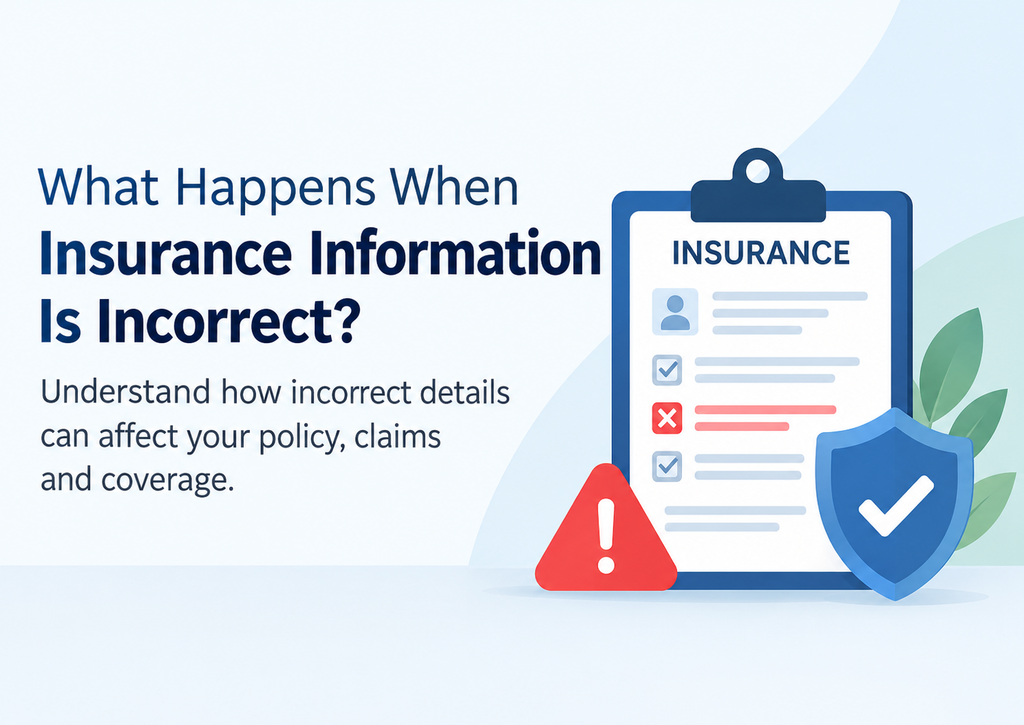
Insurance policies are issued based on the information provided by the policyholder at the time of application. Details such as age, income, medical history, occupation, vehicle information, property details, and previous claims help insurance companies assess risk and determine policy terms. When this information is incorrect, incomplete, or inconsistent, it can create complications during policy servicing or claim settlement.
Providing accurate information is therefore an important part of maintaining a reliable insurance relationship. Even a small mistake can sometimes lead to delays, additional verification, or disputes with the insurance company.
Incorrect Information Can Affect Policy Issuance
Insurance companies use application details to decide whether to provide coverage and under what conditions. If important information is inaccurate, the insurer may request clarification or supporting documents before issuing or modifying the policy.
For example, an incorrect date of birth may affect the premium calculation for a life insurance policy. Similarly, incorrect information about a vehicle’s usage or a property’s location may affect the coverage offered.
Depending on the nature of the error and the applicable policy terms, the insurer may require the information to be corrected or the policy details to be reviewed.
Claim Settlement May Become Complicated
Incorrect information often becomes a significant concern when a policyholder submits an insurance claim. The insurance company may compare the details in the original proposal form with the claim documents and other available records.
If the information does not match, the insurer may seek explanations, additional documents, or further investigation.
For instance, inconsistencies in medical history, income declarations, employment details, or the circumstances of an accident may require clarification. Such discrepancies can delay the assessment of a claim while the insurer verifies the facts.
However, an inconsistency does not automatically establish fraud or justify every claim rejection. The circumstances, available evidence, applicable law, and policy conditions must be considered.
Inaccurate Medical Information in Health and Life Insurance
Medical history can play an important role in health and life insurance underwriting. Information about existing illnesses, previous treatments, ongoing medication, or past medical investigations may influence the insurer’s assessment of an application.
If relevant medical information is missing or incorrect, questions may arise when a claim is filed. The insurer may examine the proposal form, medical records, and other evidence to determine whether the information was material to the policy or claim.
Policyholders should review medical declarations carefully and ensure that the information supplied is complete and accurate to the best of their knowledge.
Incorrect Income or Occupation Details
Income and occupation information may be relevant to certain life insurance applications and other forms of coverage. Incorrect declarations can lead to questions about financial eligibility, the suitability of the insured amount, or the nature of the risk being covered.
For example, if the income stated in an application differs significantly from supporting financial documents, the insurer may request clarification or additional proof.
Keeping employment records, income documents, and application details consistent can help reduce avoidable disputes.
Errors in Motor and Property Insurance Details
Incorrect vehicle registration details, vehicle usage, address information, or property descriptions can also create problems.
In motor insurance, discrepancies in the vehicle’s details or declared usage may affect claim assessment. In property insurance, incorrect information about the insured premises, occupancy, or property characteristics may require further verification.
Policyholders should review these details when purchasing or renewing a policy and request corrections whenever an error is identified.
Policy Corrections and Possible Consequences
The consequences of incorrect insurance information depend on the type of mistake, its significance, when it was discovered, and the applicable policy terms and legal requirements.
Possible outcomes may include:
- A request for clarification or supporting documents.
- Correction of policy records, where permitted.
- Reassessment of the risk or applicable premium.
- Delays while information is verified.
- A dispute regarding coverage or claim eligibility.
- Claim rejection or other policy consequences where justified under applicable terms and law.
An innocent clerical error should not automatically be treated as deliberate misrepresentation. Equally, knowingly providing false information can have serious consequences. Each case requires an assessment of the facts and relevant policy provisions.
The Importance of Reviewing Insurance Documents
Policyholders should carefully review their proposal forms, policy schedules, declarations, and endorsements. Names, dates of birth, addresses, medical declarations, vehicle details, insured amounts, and other important information should be checked for accuracy.
If an error is discovered, it is advisable to notify the insurance company in writing and retain the acknowledgement and supporting documents. Written communication can help establish when the correction was requested and what information was provided.
If an insurer raises concerns about a discrepancy or rejects a claim on that basis, the policyholder should examine the stated reasons and request clarification where necessary.
How Insurance Resolve Can Help
Incorrect insurance information can create uncertainty, especially when a policyholder faces a claim delay, claim rejection, or disagreement with an insurance company.
Insurance Resolve assists policyholders with insurance-related problems, including disputes involving claim rejection, claim delays, short-settled claims, policy mis-selling, lapsed policies, and unresolved servicing issues.
Our approach involves reviewing the available case documents, understanding the concerns raised by the insurance company, and helping policyholders understand possible avenues for resolution. The appropriate course of action depends on the individual case and the applicable policy terms.
Insurance Resolve does not sell insurance products, and no particular claim outcome can be guaranteed.
Conclusion
Accurate insurance information helps establish clear policy records and reduces the risk of misunderstandings during claim assessment. Policyholders should provide truthful details, review documents carefully, and seek corrections as soon as errors are identified.
When an insurance company questions the information provided or a claim is affected by discrepancies, understanding the reasons and reviewing the relevant documents can help the policyholder make informed decisions.
Need assistance with an insurance-related issue?
- Website: https://insuranceresolve.com/
- Email: help@insuranceresolve.com
- Phone: +91 9910352249
Insurance Resolve — We Resolve. You Relax.

